RESEARCH02
Normal colon Immune environment
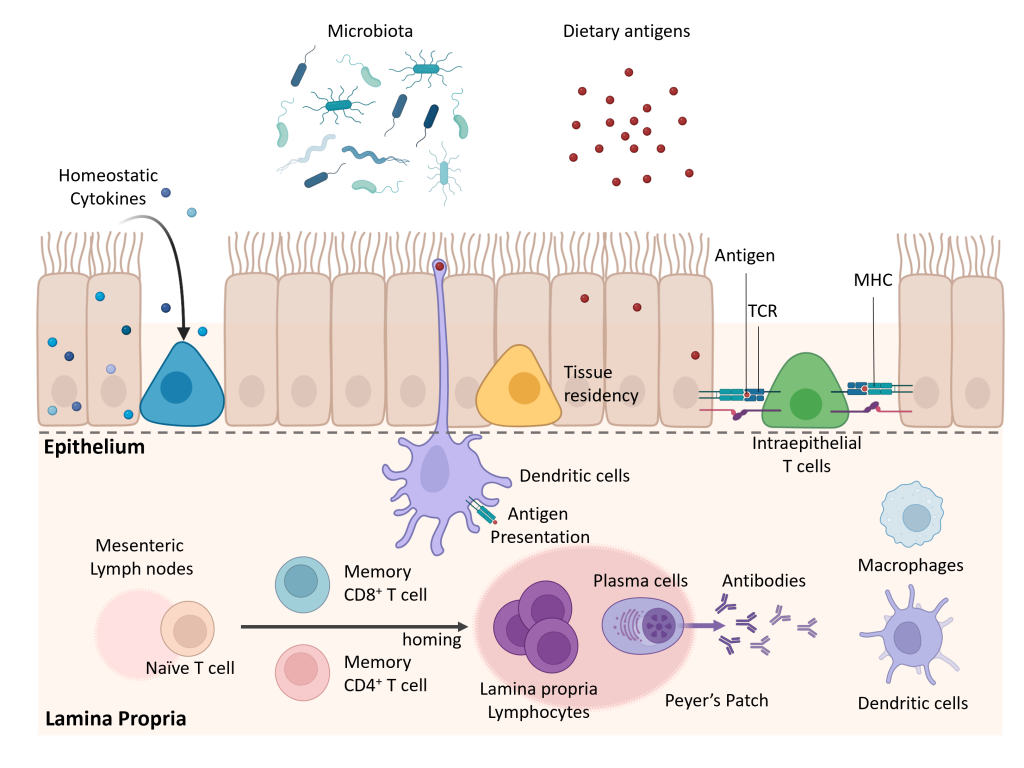
Colon is an organ where continuous T cell activation against foreign antigens
from ingested matters and lumen-residing microorganisms occurs. To prevent the excessive activation of T and other immune cells, colon generate a robust immunosuppressive microenvironment, hence achieving immune balance. Understanding this intricate balance between immune activation and suppression in the colon is essential, as its dysregulation can lead to
inflammatory bowel diseases or cancer.
A comprehensive understanding of the colonic immune system requiresexploring the distinct intra-colonic compartments: the lumen-facing epithelium and the underlying lamina propria. T cells residing in these compartments encounter different antigen and cytokine stimuli, leading to region-specific differentiation and potentially specialized roles in preserving colonic immune homeostasis. By elucidating this complexity of the colonic immune system, we seek to gain a deeper understanding of the colonic immune homeostasis and identify potential therapeutic targets for immune-related diseases.
Key Research Directions
Comprehensive examination of Colon Immune Composition
We aim to investigate the heterogeneity of T and other immune cells in different compartments of colon and compare their composition based on multi-omics data including single cell transcriptomic, proteomic, and T-cell receptor analysis.
Clonal Tracking of T cells across Different Compartments
We aim to examine T cells with inter-compartmental clonal overlap and analyze their activation and suppressive characteristics to discover novel immune population that participate in fine-tuning the immune homeostasis in normal colon.